Cantrell, Mississippi
The GuiltyCantrell, Mississippi, is both Will Robie’s former home and the setting of his reluctant return: a small town close to the Louisiana border, where his father is jailed for the murder of Sherman Clancy. Robie knows its roads and landmarks from the eighteen years he spent there, but two decades away have made familiarity unreliable. The town’s unchanged appearance conceals an altered personal landscape: his father is under arrest, and Robie has come back to face a past he once chose to leave.
Setting and Regional Landscape
Cantrell lies on Mississippi’s southern border with Louisiana, less than five miles from the Gulf Coast. Interstate 10 runs to its north and Highway 59 lies to the west; from town, Robie is closer to Louisiana than to Gulfport. The location is remote enough to feel like a place one must deliberately travel to, rather than pass through. On his approach, Robie turns southwest off Route 49 and passes a sign for a Dummy Line, an abandoned railroad track once used to carry lumber during a boom that has long since ended. The signs remain because nobody has removed them, a small, visible remnant of an earlier economy.
The region’s subtropical climate shapes the memories Robie carries back with him. Winters are short and mild, summers long and humid; he remembers seeing snow only twice while growing up. At four, encountering it for the first time, he ran screaming into the house. He had also lived through hurricanes, F5 tornadoes, and severe flooding, hazards he regarded as part of life in southern Mississippi. These recollections make the landscape more than a point on a map: it is a place whose weather and disasters formed the conditions of his childhood.
A Town That Has Changed
Robie reaches Cantrell’s limits at exactly one in the afternoon. The welcome sign gives the town’s current population as three short of 2,000, down from 2,367 when he left. The numbers mark a decline, though the evidence does not explain its cause. To Robie, the smaller population makes the town’s continued existence seem uncertain; he wonders whether those who remain have no way out, or simply no will to leave.
At first glance, little appears different. Twenty-two years after departing, Robie sees a town that seems much as he remembers it, but the impression is qualified by the fact that circumstances have changed. The prominent exception is not a new building or altered street: his father is now in jail for murder. The unchanged scenery therefore sharpens rather than settles the contrast between Robie’s memories and the present. Even a landscape that looks preserved cannot restore the life he left behind.
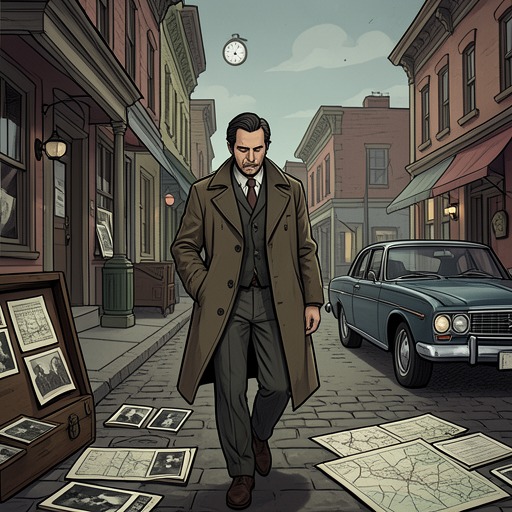
The town’s streets give that impression a particular texture. Robie’s shiny rental car stands out among dusty pickup trucks, old Lincolns, Furys, and wide-trunked Impalas. A cherry-red late-model BMW is parked outside a storefront advertising deep-sea fishing, a conspicuous detail in a place where tourism does not seem to thrive. In downtown, local faces follow the unfamiliar driver with attention. The response makes Robie’s return visible to the community even before he reaches the jail: he is a returning native, but to the people watching, he is also a conspicuous newcomer.
Robie’s Former Home and Return
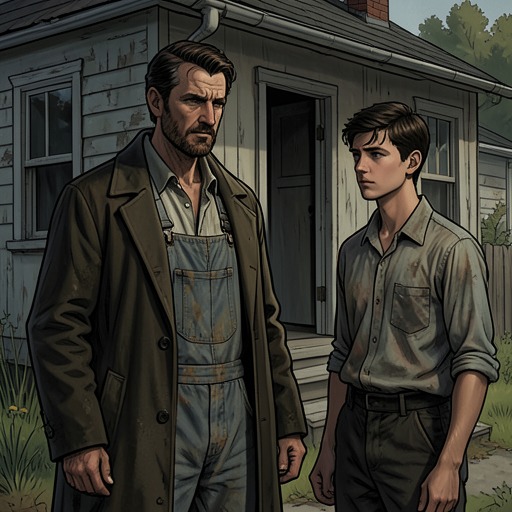
Cantrell was the only world Robie knew for the first eighteen years of his life. Eventually he wanted no more of it, and it was not a place he wanted to revisit. By the time he returns, twenty-two years have passed since he left. His family ties there have narrowed to his father: he has no brothers or sisters, and his mother is no longer present in his life. That absence gives the return a concentrated focus. The town is not a reunion with a broad family network; it is the place where the one close relative who remains has been accused of murder.
The practical geography of the return reflects Robie’s old familiarity. He knows where the town stockade is and drives toward it without needing directions, ignoring the residents staring at him. Later, with a few hours before meeting Taggert at Momma Lulu’s on Little Choctaw, three streets from the jail, he turns back to explore his former hometown. The itinerary is both purposeful and provisional: the jail anchors his reason for coming, while the spare hours take him through places he once knew.
The Clancy Connection and Narrative Role
The Clancy family belongs to Robie’s memory of the town. When he lived there, they were farmers who kept mostly to themselves, worked their land, and sold what they grew. They were known locally but not especially liked, and had neither substantial money nor grand ambitions, at least as Robie remembered them. More than twenty years have elapsed, leaving open the possibility that their circumstances—and the town around them—have changed. Sherman Clancy’s death makes that old acquaintance newly consequential: evidence points to Robie’s father, Daniel Robie, and the elder Robie has been arrested.
Cantrell thus joins the novel’s intimate family conflict to a specific, declining hometown. Its roads make Robie’s return possible without making it welcome; its familiar landmarks coexist with new consequences he cannot treat as familiar. The town’s importance lies in that tension. It is the place Robie left behind, the setting of his father’s arrest, and the ground on which he must confront a murder accusation involving a family he once knew.